Water hardness varies dramatically across the United States. Based on USGS geological survey data, we mapped every state's average water hardness level. The results explain why some cities deal with constant limescale buildup while others barely notice.
More than 85% of American homes have hard water to some degree (USGS, Water Science School). But the difference between "slightly hard" at 65 PPM and "very hard" at 300+ PPM is enormous in terms of what it does to your plumbing, skin, and hair.
Below, you'll find every state's water hardness range, organized by region. Use this as a quick reference to understand what's coming out of your tap.
Understanding Water Hardness: The Scale
Before looking at state-by-state data, it helps to know what the numbers actually mean.
The USGS classifies water hardness based on dissolved calcium carbonate (CaCO₃) measured in milligrams per liter (mg/L), which is the same as parts per million (PPM). Many water softener companies use grains per gallon (GPG) instead. The conversion: 1 GPG = 17.12 PPM.
| Classification | PPM (mg/L) | GPG | What You'll Notice |
|---|---|---|---|
| Soft | 0–60 | 0–3.5 | Soap lathers easily. Minimal residue on fixtures. |
| Moderately Hard | 61–120 | 3.5–7.0 | Some spotting on dishes. Slight soap scum. |
| Hard | 121–180 | 7.0–10.5 | Visible limescale. Dry skin and hair after showering. |
| Very Hard | 180+ | 10.5+ | Heavy buildup on fixtures. Skin irritation common. Hair feels stiff and brittle. |
Most municipal water in the US falls between 100 and 300 PPM. The EPA does not set a legal maximum for water hardness because calcium and magnesium aren't considered health hazards. They're classified under "secondary standards," meaning they affect aesthetics, not safety (EPA, Secondary Drinking Water Standards).
The numbers below represent typical ranges, not exact readings for your specific tap. Water hardness can vary between neighborhoods, water sources, and seasons. For a precise reading, a home test kit or your local water utility's Consumer Confidence Report will give you the PPM at your address.
The West: Where Hard Water Hits Hardest
Western states consistently rank among the hardest in the country. Limestone-rich geology and arid climates concentrate dissolved minerals. If you live anywhere from Arizona to Wyoming, there's a good chance your water is well above 180 PPM.
| State | PPM Range | GPG Range | Classification |
|---|---|---|---|
| Alaska | 65–140 | 3.8–8.2 | Moderate to Hard |
| Arizona | 200–350+ | 11.7–20+ | Hard to Very Hard |
| California | 100–300 | 5.8–17.5 | Moderate to Very Hard |
| Colorado | 120–250 | 7.0–14.5 | Moderate to Hard |
| Hawaii | 20–100 | 1.2–5.8 | Soft to Moderate |
| Idaho | 20–180 | 1.2–10.5 | Soft to Hard |
| Montana | 40–150 | 2.3–8.8 | Soft to Hard |
| Nevada | 200–350+ | 11.7–20+ | Hard to Very Hard |
| New Mexico | 150–350+ | 8.8–20+ | Hard to Very Hard |
| Oregon | 20–120 | 1.2–7.0 | Soft to Moderate |
| Utah | 200–350+ | 11.7–20+ | Hard to Very Hard |
| Washington | 20–120 | 1.2–7.0 | Soft to Moderate |
| Wyoming | 120–300 | 7.0–17.5 | Moderate to Very Hard |
Arizona, Nevada, Utah, and New Mexico consistently test at the top of the national hardness scale. Phoenix, Las Vegas, and Albuquerque all regularly exceed 250 PPM. The geology is the main driver: the Southwest sits on vast limestone and dolomite formations that dissolve calcium and magnesium into groundwater over thousands of years.
The Pacific Northwest is the exception. Oregon and Washington benefit from volcanic geology and high rainfall that dilutes mineral content. Portland and Seattle typically test below 30 PPM, making their water genuinely soft. Hawaii falls into the same category thanks to its volcanic rock base.

The Midwest: Hard Water Country
The Great Plains and upper Midwest sit on some of the most mineral-dense aquifers in the country. USGS mapping data shows a nearly unbroken band of hard-to-very-hard water stretching from the Dakotas through Texas.
| State | PPM Range | GPG Range | Classification |
|---|---|---|---|
| Illinois | 60–180 | 3.5–10.5 | Soft to Hard |
| Indiana | 150–350 | 8.8–20+ | Hard to Very Hard |
| Iowa | 80–180 | 4.7–10.5 | Slightly Hard to Hard |
| Kansas | 150–350+ | 8.8–20+ | Hard to Very Hard |
| Michigan | 60–180 | 3.5–10.5 | Soft to Hard |
| Minnesota | 150–300 | 8.8–17.5 | Hard to Very Hard |
| Missouri | 100–300+ | 5.8–17.5+ | Moderate to Very Hard |
| Nebraska | 120–300 | 7.0–17.5 | Moderate to Very Hard |
| North Dakota | 80–180 | 4.7–10.5 | Slightly Hard to Hard |
| Ohio | 80–180 | 4.7–10.5 | Slightly Hard to Hard |
| Oklahoma | 120–300 | 7.0–17.5 | Moderate to Very Hard |
| South Dakota | 100–200 | 5.8–11.7 | Moderate to Hard |
| Wisconsin | 80–200 | 4.7–11.7 | Slightly Hard to Hard |
Indiana and Kansas are the standouts. Indianapolis regularly tests above 250 PPM, and parts of western Kansas exceed 350 PPM. The limestone bedrock underlying most of Indiana means the water has been dissolving calcium carbonate since long before modern plumbing existed.
Minnesota and Nebraska aren't far behind. The glacial deposits across the northern plains left behind calcium-rich sediment that makes its way into well water and municipal supplies alike.
If you're in the Midwest and your showerhead is clogging faster than it should, your water hardness is likely the reason. A USGS study of groundwater in the High Plains aquifer found average hardness values between 200 and 300 PPM across much of the region (USGS, High Plains Water-Level Monitoring Study).
The South: A Mixed Picture
Southern states range from moderately hard to very hard, with significant variation depending on whether your area draws from surface water or groundwater. Coastal areas tend toward softer water, while inland regions pull from harder aquifers.
| State | PPM Range | GPG Range | Classification |
|---|---|---|---|
| Alabama | 120–180 | 7.0–10.5 | Moderate to Hard |
| Arkansas | 20–100 | 1.2–5.8 | Soft to Moderate |
| Delaware | 60–180 | 3.5–10.5 | Soft to Hard |
| Florida | 100–300 | 5.8–17.5 | Moderate to Very Hard |
| Georgia | 80–180 | 4.7–10.5 | Slightly Hard to Hard |
| Kentucky | 100–180 | 5.8–10.5 | Moderate to Hard |
| Louisiana | 100–180 | 5.8–10.5 | Moderate to Hard |
| Maryland | 60–180 | 3.5–10.5 | Soft to Hard |
| Mississippi | 80–150 | 4.7–8.8 | Slightly Hard to Hard |
| North Carolina | 60–180 | 3.5–10.5 | Soft to Hard |
| South Carolina | 80–180 | 4.7–10.5 | Slightly Hard to Hard |
| Tennessee | 80–180 | 4.7–10.5 | Slightly Hard to Hard |
| Texas | 150–350+ | 8.8–20+ | Hard to Very Hard |
| Virginia | 60–180 | 3.5–10.5 | Soft to Hard |
| West Virginia | 80–180 | 4.7–10.5 | Slightly Hard to Hard |
Texas and Florida are the hard water leaders in the South. San Antonio regularly tests above 300 PPM, and much of central Florida sits on a limestone aquifer that pushes readings well past 200 PPM. The Florida Aquifer system is one of the most productive groundwater sources in the world, and it's loaded with dissolved calcium.
Coastal cities in the Carolinas, Virginia, and Georgia tend to run softer, especially where surface water treatment plants supply the tap. Move inland toward the Piedmont and Appalachian regions, and the numbers climb.
Arkansas is a surprise on this list. With an average around 38 PPM (USGS), it's one of the softest water states in the country. Little Rock and Fayetteville both test below 30 PPM in most readings.

The Northeast: Generally Softer
New England and the mid-Atlantic benefit from granite and metamorphic rock formations that don't dissolve easily. Most states in this region fall in the soft-to-moderately-hard range, which is good news for plumbing and skin.
| State | PPM Range | GPG Range | Classification |
|---|---|---|---|
| Connecticut | 30–120 | 2.0–7.0 | Soft to Moderate |
| Maine | 20–100 | 1.2–5.8 | Soft to Moderate |
| Massachusetts | 30–120 | 2.0–7.0 | Soft to Moderate |
| New Hampshire | 20–100 | 1.2–5.8 | Soft to Moderate |
| New Jersey | 50–150 | 2.9–8.8 | Slightly Hard to Hard |
| New York | 30–120 | 2.0–7.0 | Soft to Moderate |
| Pennsylvania | 60–180 | 3.5–10.5 | Soft to Hard |
| Rhode Island | 30–120 | 2.0–7.0 | Soft to Moderate |
| Vermont | 20–120 | 1.2–7.0 | Soft to Moderate |
Maine, New Hampshire, and Vermont regularly test under 50 PPM. The granite bedrock across northern New England doesn't contribute much calcium or magnesium to the water supply. Boston and New York City source their water from protected reservoirs that consistently test soft.
Pennsylvania is the exception. The eastern half runs moderate, but the western half near Pittsburgh sits on limestone, pushing readings above 150 PPM in some areas.
New Jersey varies more than you might expect. Northern NJ draws from softer surface sources, while the southern half taps into groundwater with higher mineral content.
How to Check Your Exact Water Hardness
State averages are useful as a starting point, but your actual hardness depends on your specific water source. Three ways to find out what's coming through your tap:
1. Check your annual water quality report. Every municipal water supplier is required to publish a Consumer Confidence Report (CCR) each year. Search "[your city] water quality report" or check the EPA's database at epa.gov/ccr. Hardness is usually listed as "calcium carbonate" in mg/L.
2. Use a home test kit. A basic test strip costs under $10 and gives results in seconds. Titration-based kits (around $15–20) are more accurate. Either will tell you your PPM and GPG.
3. Contact your water utility directly. Most utilities will tell you current hardness readings over the phone or on their website. If you're on well water, you'll need to test it yourself since well water isn't covered by municipal reporting.
What Hard Water Does (and Why It Matters)
If your state shows moderate or above on the chart, here's what that means day to day:
Plumbing and fixtures. Calcium deposits build up inside pipes, around faucet aerators, and on showerhead nozzles. Over time, this restricts flow and reduces water pressure. The American Water Works Association estimates hard water contributes to 30–50% shorter lifespan for household water heaters.
Skin and hair. Hard water minerals combine with soap to form a film that doesn't rinse off completely. Dermatology research has linked hard water exposure to increased eczema flare-ups and dry skin (British Journal of Dermatology, 2018). Hair exposed to hard water loses moisture faster and becomes prone to breakage.
Cleaning efficiency. You'll use 50–75% more soap, shampoo, and detergent in hard water areas compared to soft water areas. That's not marketing spin. It's the figure the Water Quality Association cites most often when discussing the economic impact of hard water on households.
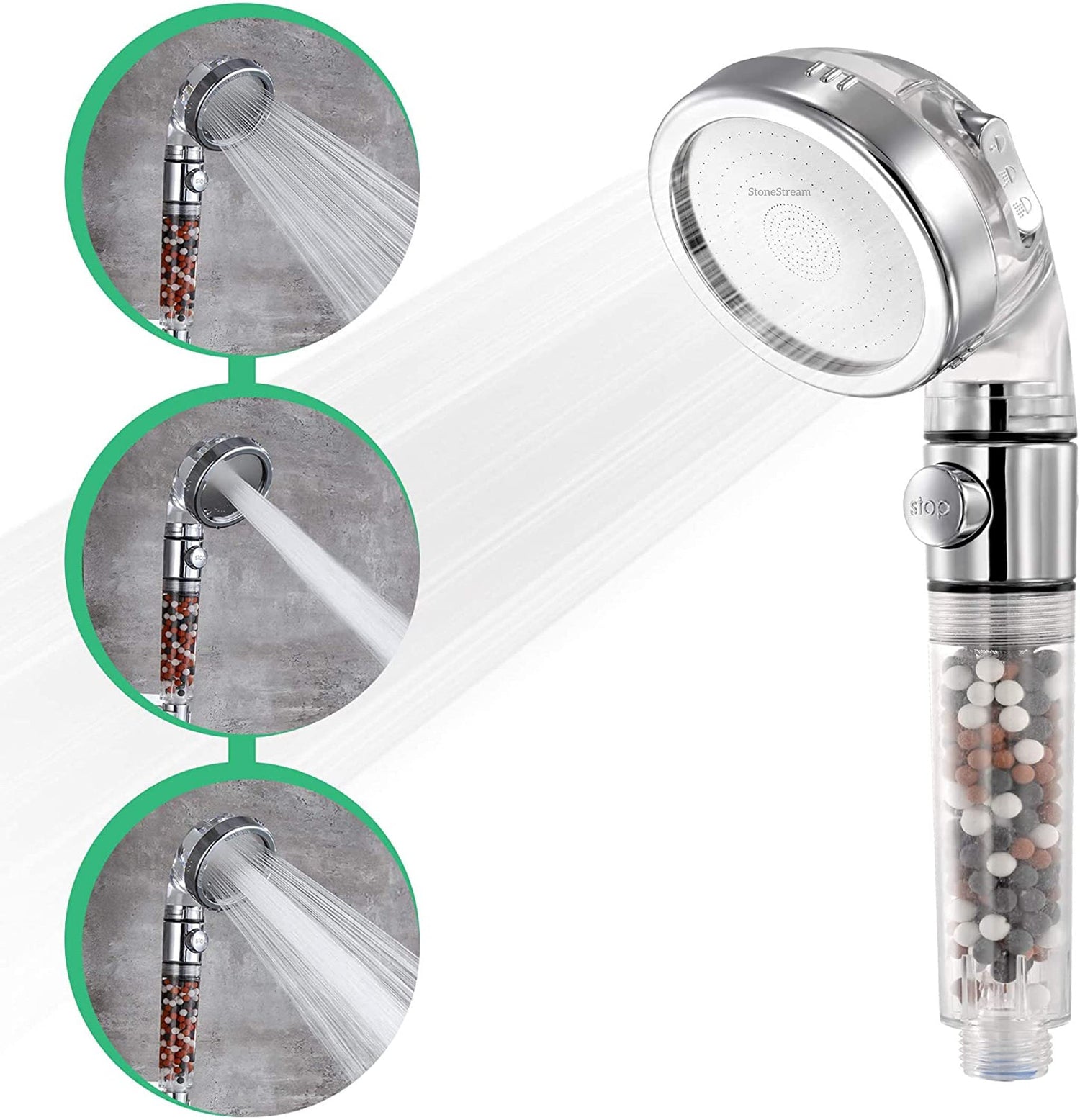
The most practical solution for shower-specific hard water problems is a multi-stage filtered shower head. Unlike whole-house softener systems that cost $1,000–$3,000, a point-of-use shower filter handles the water where it matters most: where it contacts your skin and hair daily. Filtered shower heads like the StoneStream EcoPower use KDF media and mineral stones to reduce chlorine and soften mineral content at the source.
Key Takeaways
- Arizona, Nevada, Utah, New Mexico, Indiana, Kansas, Texas, and Minnesota consistently rank among the hardest water states in the US, regularly exceeding 200 PPM.
- The Pacific Northwest (Oregon, Washington) and New England (Maine, Vermont, New Hampshire) have some of the softest water in the country, generally under 100 PPM.
- The USGS classifies water as "hard" at 121 PPM and "very hard" above 180 PPM. Most of the Midwest and Southwest exceeds those thresholds.
- 85% of American homes have some degree of hard water. The EPA doesn't regulate hardness because calcium and magnesium aren't health hazards, but they cause significant damage to fixtures, skin, and hair over time.
- Your exact water hardness depends on your specific water source. Check your city's annual Consumer Confidence Report or use a home test kit for an accurate reading.
- Hard water reduces showerhead lifespan, increases soap usage by 50–75%, and has been linked to increased eczema flare-ups in dermatology research.
For state-specific shower solutions, browse hard water shower heads and filters.